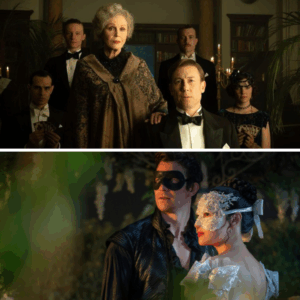
The fog-shrouded spires of Nevermore Academy have always whispered secrets, but none quite as tantalizing as the one lurking in the Addams family crypt: Aunt Ophelia, the elusive sister of Morticia Addams, long rumored to be lost to the ether—or worse, locked away in some forgotten Frump folly. After two seasons of masterful misdirection, Netflix has finally unveiled the face behind the phantom, casting the ethereal Eva Green as this enigmatic enchantress in the upcoming third installment of Wednesday. Announced on November 25, 2025, mere weeks after Season 2’s split-release finale left fans clawing at their screens, Green’s addition isn’t just a casting coup—it’s a seismic shift, injecting the series with a dose of gothic grandeur that promises to upend the Addams’ precarious perch on the edge of normalcy. Showrunners Al Gough and Miles Millar, the twisted architects behind the show’s macabre magic, couldn’t contain their glee: “Eva Green has always brought an exhilarating, singular presence to the screen—elegant, haunting, and beautifully unpredictable. Those qualities make her the perfect choice for Aunt Ophelia.” Green herself, ever the mistress of mystique, echoed the enthusiasm in a statement to Tudum: “I’m thrilled to join the woefully twisted world of Wednesday as Aunt Ophelia. This show is such a deliciously dark and witty world, I can’t wait to bring my own touch of cuckoo-ness to the Addams family.” With Jenna Ortega’s razor-sharp Wednesday poised to unravel her aunt’s thorny tapestry, Season 3—slated for a 2027 premiere—is poised to plunge deeper into the family’s festering folklore, where blood ties bind tighter than barbed wire and every reunion reeks of revelation. In a streaming landscape starved for sophistication amid the schlock, this upgrade doesn’t just elevate Wednesday; it resurrects the Addams ethos in all its gloriously grim splendor, ensuring the series remains Netflix’s crown jewel of creepy-cool chaos.
To understand the seismic stakes of Ophelia’s arrival, one must rewind to the cradle of the Addams legend, where Charles Addams’s ink-stained vignettes first birthed a brood of beautiful freaks in the pages of The New Yorker back in 1938. Ophelia Frump, though not a charter member of the canon, emerged in the 1960s as Morticia’s sunnier, somewhat scatterbrained sibling—a foil to her sister’s sultry sophistication, all floral crowns and flighty fancies in the original TV series and subsequent cartoons. Portrayed fleetingly as a wide-eyed ingenue prone to romantic reveries and accidental enchantments, Ophelia was the Addams’ answer to the girl next door: disarmingly daffy, with a penchant for potions that packed more punch than planned. Yet in Tim Burton’s vision for Wednesday—a reimagining that swaps campy comedy for brooding bildungsroman—the character’s contours sharpen into something sinisterly sublime. Teased across Seasons 1 and 2 as a spectral specter in Morticia’s murmured anecdotes and Pugsley’s pilfered Polaroids, Ophelia was the black sheep who wandered too far from the fold, her disappearance chalked up to a “family matter” too morbid for mixed company. Grandmama Hester Frump (Joanna Lumley, channeling venomous vivacity), the iron-fisted matriarch who committed Ophelia to Willow Hill Psychiatric Hospital in her youth, dismissed her as “the one who danced with devils—and lost.” But the Season 2 finale, dropping like a guillotine in September 2025, cracked the crypt wide open: Wednesday, thumbing through her aunt’s leather-bound journal—a parting gift from Morticia laced with deranged doodles and dire warnings—plunges into a psychic seizure. Visions assault her: a woman with cascading blonde locks and a wilted flower crown, her red gown pooling like spilled wine in a shadowed cell within Hester’s sprawling, spiderwebbed mansion. As the trance tightens, Ophelia turns, her eyes wild with otherworldly ire, and scrawls in crimson script across the stone: “Wednesday must die.” It’s a bombshell that detonates the Addams’ fragile facade, transforming a long-lost relative into a harbinger of havoc. Gough and Millar, in a Tudum exclusive, teased the fallout: “Ophelia’s re-emergence is going to hit this family like a bomb.” No longer a footnote in family lore, she’s the fuse to a powder keg of prophecies, poised to drag Wednesday from Nevermore’s nocturnal intrigues into the heart of Addams ancestral agony.
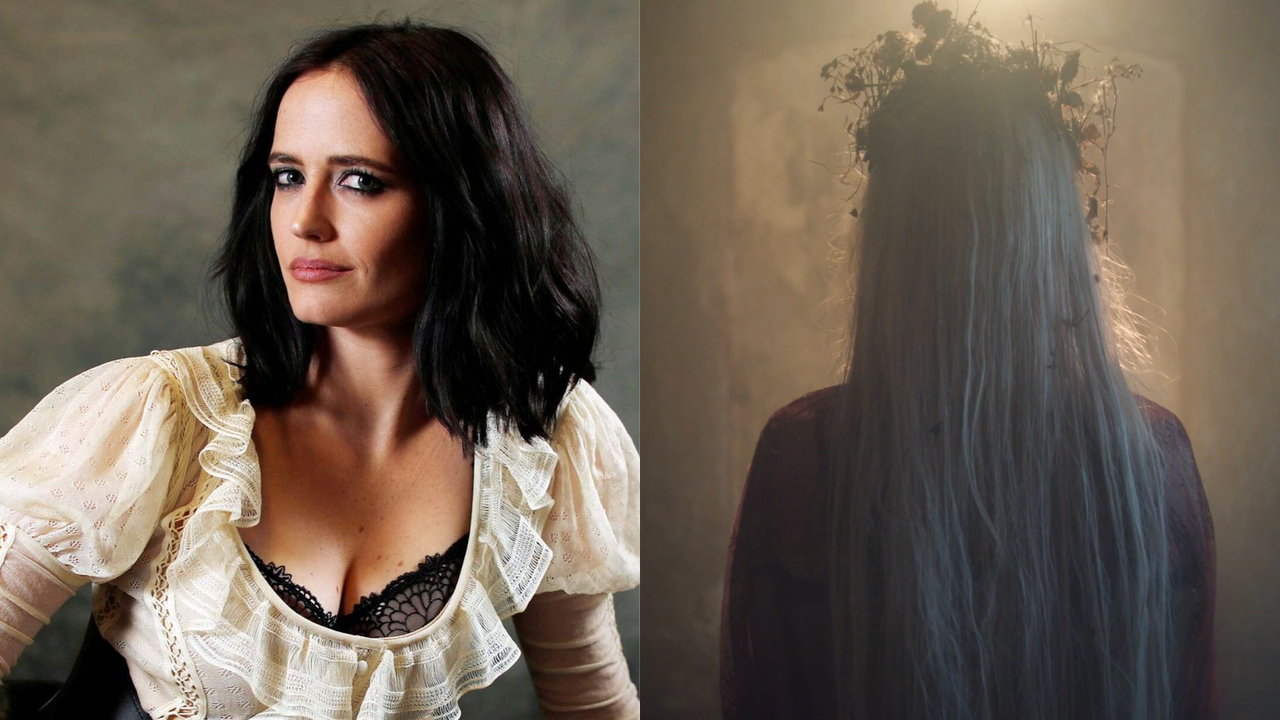
Green’s casting feels less like serendipity and more like sorcery, a reunion with director Tim Burton that harks back to their collaborations on Miss Peregrine’s Home for Peculiar Children (2016), where she embodied the enigmatic Emma Bloom with a blend of fragility and ferocity, and Dark Shadows (2012), slipping into the skin of the vengeful Angelique Bouchard with vampiric vim. At 45, the French-born firebrand—daughter of a French actress and a British journalist—has long been the silver screen’s siren of the strange, her luminous gaze and lithe frame lending an otherworldly allure to roles that teeter on the precipice of passion and peril. From her sultry debut as Sibylla in Ridley Scott’s Kingdom of Heaven (2005) to her Bond-girl bite as Vesper Lynd in Casino Royale (2006), Green’s career is a compendium of complex femmes fatales, each etched with an undercurrent of unease. Her television triumph came in Showtime’s Penny Dreadful (2014-2016), where she conjured Vanessa Ives—a clairvoyant corseted in corsets and curses—with such hypnotic intensity that it garnered a Golden Globe nod and cemented her as the queen of Victorian vogue horror. “I love playing evil characters,” Green once confided in a 2012 interview, “but they have to have a heart and not just be pure evil. People need to understand why they have become evil; they are just damaged.” For Ophelia, this duality is dynamite: a woman warped by institutional irons, her “cuckoo-ness” a cocktail of clairvoyance and calamity, her floral frippery fraying into feral frenzy. Imagine her sweeping into the Addams manse, all lace and lunacy, her whispers weaving spells that ensnare Wednesday in a web of warped kinship. Fans on X are already ablaze: “Eva Green as Aunt Ophelia? That’s the gothic energy Wednesday Addams deserves. Can’t wait to see her stir up some supernatural chaos in the family,” one post raved, while another gushed, “Absolutely perfect casting for the Addams universe.” With Burton at the helm—his spindly silhouette synonymous with sympathetic spookiness—Green’s Ophelia promises to be less villain, more vortex: a mirror to Wednesday’s own mercurial madness, forcing the teen seer to confront the curse of clairvoyance that courses through their cursed veins.
Season 3’s narrative nebula, still shrouded in secrecy, orbits this explosive family fulcrum, expanding the Wednesday cosmos beyond Nevermore’s ivy-clad isolation into the labyrinthine legacy of the Addams line. After Season 2’s bifurcated binge—Part 1 unspooling in August 2025 with werewolf woes and witch hunts, Part 2 capping in September with the unmasking of Pugsley’s zombie “Slurp” as mad scientist Isaac Night— the series shattered records anew, clocking in as Netflix’s #4 most-watched English-language series ever, trailing only its own Season 1 juggernaut. Ortega’s Wednesday, now a junior savant of the sinister, returns to Nevermore not as outcast, but oracle—her psychic spikes sharper, her sarcasm a stiletto. Yet the siren call of Ophelia yanks her from campus capers into cryptid kin: visions of Hester’s haunted hacienda, where ancestral altars brim with brimstone relics and blood-bound tomes. Morticia (Catherine Zeta-Jones, her raven tresses a torrent of temptation) must exhume her own elephantine elephants—the sibling schism that sundered their sisterhood, Ophelia’s institutional internment a scar on the Frump facade. Gomez (Luis Guzmán, ever the uxorious whirlwind) grapples with grandfatherly ghosts, his tango-tempered tenderness tested by tales of Ophelia’s outlawed dalliances with dark arts. Pugsley (Isaac Ordonez), post-zombie skirmish, stumbles into sorcery’s snare, his pint-sized pyromania paling beside auntie’s arcane arsenal. Grandmama Hester, Lumley’s leonine lore-keeper, looms larger than ever, her potions bubbling with paternalistic poison as she guards the family grimoire like a gorgon. “We will be seeing more Addams family members and learning more family secrets in Season 3,” Millar hinted to Tudum, while Gough elaborated: “This time, [Wednesday] will unearth more of the school’s sinister secrets—and descend even deeper into the Addams family crypt. Or, as Wednesday would say: ‘Nothing brings a family together like a good exhumation.’” Expect Nevermore to bleed into the backstory: Ophelia’s escape catalyzing a coven convergence, where outcasts and outlaws unite against an ancient Addams affliction—perhaps a prophetic plague that predestines the death-obsessed to dance with doom. Enid (Emma Myers), Bianca (Joy Sunday), and the motley menagerie of misfits return as Wednesday’s reluctant retinue, their teen turmoil tangled with titanic family feuds. Thing (Victor Dorobantu), the hand that haunts, scuttles into subterfuge, pilfering parchments from perilous pantries. Uncle Fester (Fred Armisen), that bulbous beacon of bedlam, might burrow back from the brink, his electric eccentricity electrifying Ophelia’s occult odyssey. It’s a tapestry of torment and tenderness, where wit whips like a widow’s walk and twists tighten like thorn crowns—darker than Season 2’s descent into doppelgangers, twistier than the Hyde hydra of yore, and chaotically delicious in its devotion to the Addams’ anarchic allure.
What elevates this escalation? Burton’s baton, conducting a symphony of shadows with his signature silhouettes and stop-motion spookiness, now amplified by Green’s gravitational pull. Filming kicks off in early 2026 across Ireland’s emerald enigmas—standing in for the Addams’ fog-festooned estate—and Romania’s ragged ruins, channeling the crypt’s crumbling charisma. The visual vernacular, a Burton hallmark, will bloom with baroque brutality: Ophelia’s chamber a chiaroscuro cage of crimson velvet and crawling vines, her journal’s jaundice pages pulsing with phosphorescent prose. Danny Elfman’s score, that perennial piper of the peculiar, will swell with sinister strings and spectral swells, underscoring scenes where sisters clash like storm clouds—Morticia’s measured malice meeting Ophelia’s unhinged urgency in a verbal venom that verges on Verdi. Ortega, at 23 the linchpin of this labyrinth, has evolved Wednesday from sullen sophomore to sovereign of the strange, her deadpan delivery a dagger dipped in dry ice. Zeta-Jones’s Morticia, a vision in violet venom, will velvet-glove the viscera, her maternal mysteries mirroring Ophelia’s madness. Guzmán’s Gomez pirouettes through the pandemonium, his ardor an anchor amid the apocalypse. The ensemble’s alchemy—Armisen’s anarchic Fester, Ordonez’s pint-sized poltergeist—ensures the Addams aren’t mere backdrop, but beating black heart. Social scrolls simmer with speculation: “Eva Green reuniting with Tim Burton for Wednesday? This is the gothic fever dream we deserve,” one X user exalted, while another prophesied, “Season 3’s family bomb will blow Nevermore wide open—Ophelia vs. Wednesday? Sign me up for the séance.” Critics, previewing the pivot, prognosticate prestige: Variety dubs it “a deliciously deranged deepening of the dynasty,” The Hollywood Reporter hails Green’s “gothic gravitas as the glue for generational gloom.”
In Netflix’s neon-noir nursery, where reboots rot on the vine, Wednesday Season 3 emerges as an elixir of eccentricity—a resurrection of the Addams’ atavistic appeal, where eccentricity isn’t eccentricity but essence. Ophelia’s odyssey isn’t mere addition; it’s ignition, fanning the flames of a franchise that’s feasted on 1.2 billion viewing hours across its first two seasons, outpacing Stranger Things in sheer supernatural sway. As 2027 beckons like a black cat at midnight, this chapter courts catastrophe with captivating candor: love as laceration, legacy as liability, lunacy as liberation. Wednesday Addams, that pint-sized prophet of the profane, stands at the threshold of her own undoing—beckoned by blood, bound by braids, braced for the bomb that bears her name. Green’s Ophelia isn’t intruder; she’s inheritor, her cuckoo call a clarion for the chaos to come. Stream the seasons that set the stage, then steel yourself for the storm. The Addams await, arms outstretched in eternal embrace—or is that entanglement? In the words of the girl with the gall, “Normal is a myth. But family? That’s the real monster.” And with Eva Green at the feast, this family’s famine for the fabulous ends—ushering in an era of exquisite excess that will haunt your holiday scrolls and hijack your Halloween haunts for seasons unseen.