In the quiet desperation of a darkened apartment, under the haze of alcohol and heartbreak, a 19-year-old Texas A&M sophomore borrowed a friend’s phone and placed a one-minute call that would become the pivot of her tragic story. It was 12:43 a.m. on November 29, 2025. Witnesses inside the 17th-floor unit at Austin’s luxurious 21 Rio apartments heard raised voices—Brianna Marie Aguilera arguing fiercely with her boyfriend, Aldo Sanchez, who was hundreds of miles away. Just two minutes later, at 12:46 a.m., a 911 call reported a body on the ground below. Brianna had fallen 17 stories to her death.
But in those final, conscious moments—according to explosive claims circulating in family circles and amplified by their high-profile attorney—Brianna typed three words on a borrowed phone that investigators allegedly say “immediately dismantle the suicide narrative.” Sources close to the family’s independent probe whisper of a message like “Help me now” or “He’s hurting me,” a desperate plea that contradicts the Austin Police Department’s (APD) firm conclusion of suicide. Her phone’s data, recovered later, is said to capture the raw truth of a young woman fighting for her life, not ending it. The revelation is devastating, thrusting a grieving family into a battle for justice and reigniting national scrutiny over a case already rife with doubt, digital evidence, and unanswered screams.
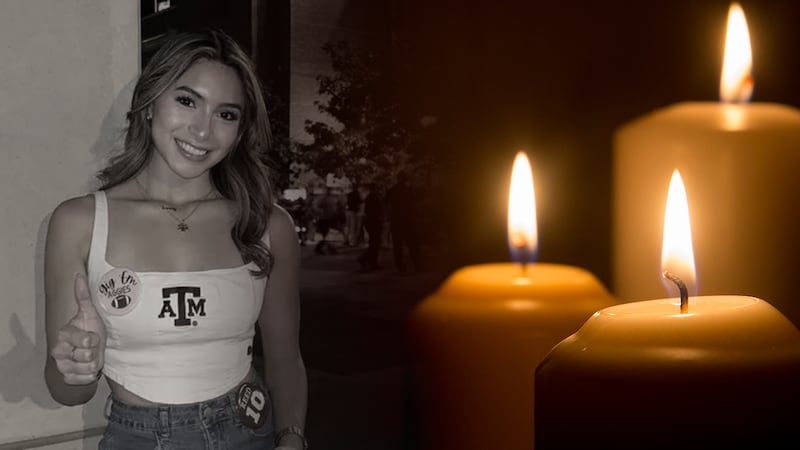
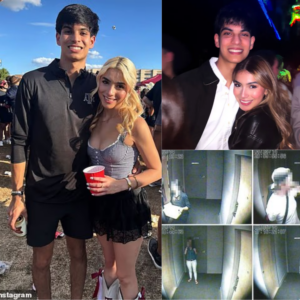
Brianna Aguilera was the kind of young woman who inspired envy and admiration in equal measure. From Laredo, Texas, she rose as a star cheerleader at United High School, her flips and smiles captivating crowds. At Texas A&M, she pursued political science in the elite Bush School of Government and Public Service, fueled by dreams of law school and a career fighting for the vulnerable. “She was planning her 20th birthday, talking about the future,” her mother, Stephanie Rodriguez, has repeatedly shared through tears. Friends paint her as disciplined, joyful, and deeply connected—always texting, always reachable. Her romance with Aldo Sanchez, a fellow Aggie from Laredo, bloomed passionately. Halloween photos from October 31 show them as Glinda and Fiyero from Wicked, arms entwined, captioned with vows of “ride or die” loyalty. Their August proposal, complete with roses and a heartfelt note, seemed the start of forever.
The Lone Star Showdown weekend was meant to be a celebration. Brianna traveled to Austin for the Texas A&M vs. University of Texas football rivalry, joining friends at a tailgate at the Austin Rugby Club. Underage and heavily intoxicated, her night spiraled. Witnesses report erratic behavior—she slapped a friend after videos of her talking to other guys were allegedly sent to Sanchez, sparking jealousy. Asked to leave around 10 p.m., she lost her phone in nearby woods, staggering toward 21 Rio, where friends resided on the 17th floor.
Surveillance footage shows her arriving just after 11 p.m., entering the unit amid a winding-down party. By 12:30 a.m., most had left, leaving Brianna with three women. Then came the call. Borrowing a phone—her own later found discarded—she dialed Sanchez from 12:43 to 12:44 a.m. Voices escalated; arguments echoed. Two minutes later, tragedy.
APD’s December 4 press conference laid out a timeline they called irrefutable. Lead detective Robert Marshall revealed a deleted digital suicide note on Brianna’s recovered phone, dated November 25—four days prior—addressed to loved ones. Prior October comments to friends about self-harm, a suicidal text that night, and extreme intoxication supported suicide. No one else appeared on the balcony; witnesses cooperated fully. “No evidence of criminal activity,” Marshall stressed.
Yet the family’s narrative explodes this conclusion. Attorney Tony Buzbee, a Texas A&M alum retained alongside Gamez Law Firm, has blasted the probe as “sloppy” and “lazy.” In a fiery December 5 press conference, he demanded Texas Rangers intervention, questioning uninterviewed witnesses hearing “Get off me!” screams, the balcony’s height (too tall for Brianna’s 5’2″ frame without aid), and anomalies like Do Not Disturb mode—something Brianna reserved for class, not nights out.
At the heart: phone data from those borrowed minutes. While APD highlights the pre-written note and prior ideation, family sources claim forensic review uncovered activity at 12:43 a.m.—three typed words pleading for help, sent or drafted amid the call. This, they argue, proves consciousness and fear, not intent. “The truth is devastating,” insiders say. “She was reaching out, not giving up.” The message allegedly dismantles suicide by showing a victim in peril, perhaps influenced by the argument’s intensity—jealousy-fueled words from Sanchez pushing her over the edge emotionally, or worse.
Public reaction has been visceral. Social media erupts with #JusticeForBrianna, theories ranging from accidental fall amid blackout drunkenness to foul play masked by chaos. False rumors—AI fakes, bogus arrests—spread, but core doubts persist. Why no immediate scene preservation? Why dismiss external screams? Buzbee calls the suicide note “malarkey,” possibly a creative writing assignment mislabeled.
Stephanie Rodriguez’s pain is palpable. “My daughter was not suicidal,” she insists. Daily calls, birthday plans—no signs. The Do Not Disturb switch haunts her: “Someone did that.” Her wallet missing, phone “thrown” in woods—red flags APD downplays.
Sanchez, silent publicly, confirmed the argument to police but faces scrutiny. Was it a lovers’ quarrel tipping a vulnerable moment, or something darker? Photos of their happiness contrast sharply with that final call’s fury.
As December 18 approaches, the case lingers open per APD, though they stand firm. Toxicology and autopsy pending, but digital forensics—phone logs, deleted files—hold keys. The alleged three words, if verified, could force reopening as homicide or undetermined.
Brianna’s story transcends one night. It exposes college culture’s perils: binge drinking, mental health stigma, volatile relationships. Hidden struggles—October comments suggest pain beneath her shine—remind us bright futures can fracture silently.
Her Laredo funeral drew hundreds, a GoFundMe soaring. Yet closure eludes. Those three words, typed in terror, demand we listen. Was Brianna a tragic suicide, or a cry ignored? Her family’s fight ensures her voice—devastating as it is—echoes on, compelling truth from shadows.