Georgia Courtroom Prepares for Trial in Case of Toddler’s Passing Under Care of College Student
Authorities in Sumter County, Georgia, gear up for a pivotal moment as jury selection commences on December 3, 2025, in the case against Trinity Madison Poague, a 21-year-old former titleholder in local pageants. Poague faces multiple serious charges related to the passing of 18-month-old Romeo “Jaxton” Angeles on January 14, 2024, while the child was under her temporary care in a dormitory room at Georgia Southwestern State University in Americus. The proceedings, set to potentially extend through mid-December, mark a significant step in a case that has drawn widespread attention due to the defendant’s background and the tender age of the child involved.
The sequence of events leading to this trial traces back to a seemingly ordinary afternoon nearly two years prior. Julian Williams, Jaxton’s father and Poague’s then-boyfriend, had entrusted his son to Poague while he briefly left the campus to pick up dinner. Upon his return around 2 p.m., Williams discovered the toddler unresponsive in Poague’s arms. He immediately transported the child to Phoebe Sumter Medical Center, where medical staff initiated emergency protocols. Despite vigorous efforts, including resuscitation attempts, Jaxton was pronounced deceased at 4:28 p.m., succumbing to injuries that the Sumter County Coroner’s Office later attributed to blunt force trauma to the head and torso.
Poague, an 18-year-old freshman at the time and a recent graduate of Southwest Georgia Academy in Damascus, was initially cooperative with investigators. She suggested to authorities that Jaxton may have sustained his condition from a fall off her bed during a moment of inattention. However, subsequent examinations by forensic experts painted a more complex picture, prompting the involvement of the Georgia Bureau of Investigation (GBI). On January 19, 2024, just five days after the incident, GBI agents took Poague into custody at the Sumter County Jail, where she was held without bond pending further review.
The initial charges filed by the GBI included felony murder, aggravated battery, and first-degree cruelty to children. As the probe deepened, a grand jury in June 2024 elevated the accusations to encompass malice murder, two counts of felony murder, two counts of aggravated battery, and one count of first-degree cruelty to children. These formal indictments, unsealed shortly thereafter, detailed allegations that Poague inflicted the trauma while solely responsible for the child’s well-being. Poague entered a not guilty plea during her arraignment on August 14, 2024, maintaining her account of an accidental mishap. Her legal team, led by defense attorney Ashleigh Merchant, has signaled intentions to challenge the prosecution’s narrative, potentially highlighting inconsistencies in witness statements or evidentiary handling.

Throughout her detention, Poague’s bond status evolved amid community and familial pressures. In March 2024, a Superior Court judge approved her release on a $75,000 bond, conditioned on continuous ankle monitoring, restrictions on proximity to minors, and mandatory check-ins with pretrial services. This decision allowed her to return to her family in Donalsonville, a small town in Seminole County known for its agricultural heritage and annual Peanut Festival. Yet, the relief was short-lived for some; Williams publicly expressed dismay at the not guilty plea, describing it as a “slap in the face” to his grieving process during an interview with local media.
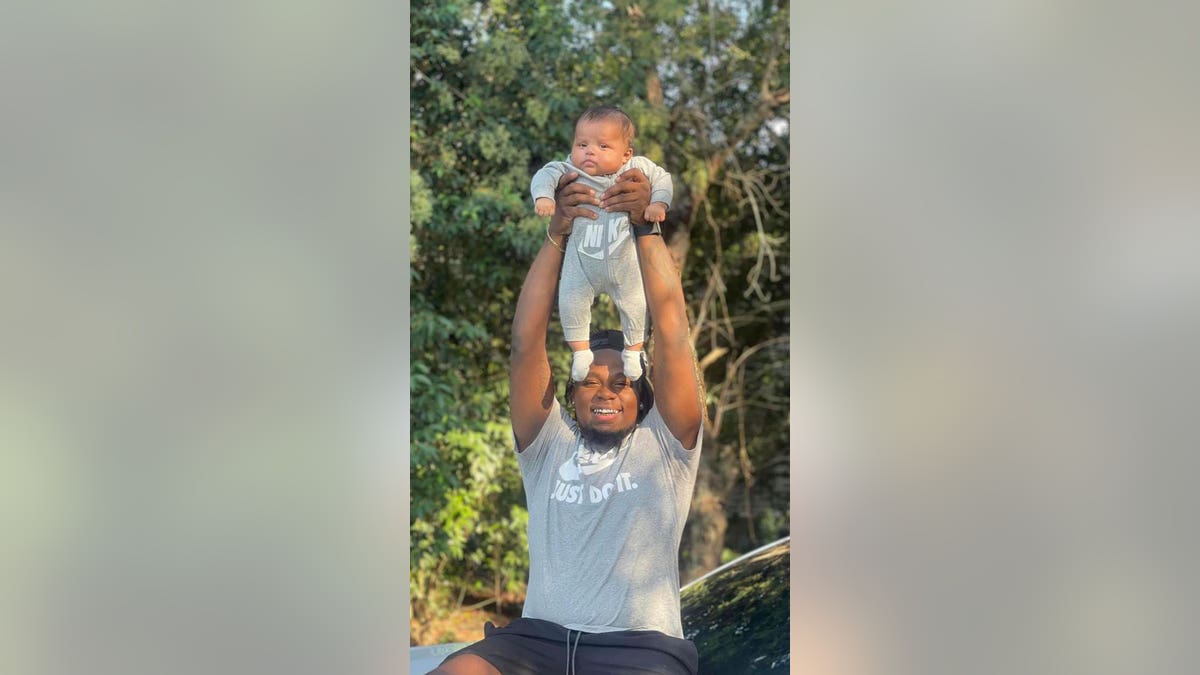
Jaxton’s story adds layers of poignancy to the unfolding drama. Born on June 25, 2022, as Romeo Angeles to mother Sheyela Angeles, the toddler was affectionately called Jaxton Dru by his father, who had sought to formalize paternity through legal channels. Williams, a young father navigating the demands of college life himself, often brought his son to campus, viewing the environment as a safe extension of home. Tragically, the dorm room—typically a hub of youthful energy with students shuffling between classes and study sessions—became the site of irreversible loss. Fellow residents later recounted to investigators hearing prolonged cries from Poague’s room that abruptly ceased, a detail that has lingered in community recollections.
Georgia Southwestern State University, a public liberal arts institution nestled in the heart of Americus, responded swiftly to the incident. Campus police, in collaboration with the Americus Police Department, secured the scene and facilitated the GBI’s entry. The university suspended Poague from enrollment pending the outcome of the charges and offered counseling resources to affected students. President Neal J. Robinson issued a statement emphasizing the institution’s commitment to safety, noting, “Our community mourns this profound loss and stands ready to support all involved in seeking understanding and healing.” Enrollment at GSW, which hovers around 3,000 undergraduates, saw a temporary dip in morale, with student organizations hosting forums on child welfare and emergency response protocols.
Americus, a city of approximately 15,000 in southwest Georgia, embodies the quiet charm of the state’s rural interior. Founded in 1839 and named after the indigenous Americus Vespucci, it boasts a rich history tied to civil rights landmarks like the Winns Baptist Church, a stop on the Underground Railroad. Yet, incidents like this one disrupt the facade of tranquility, prompting soul-searching among locals. The Sumter County Courthouse, a stately brick edifice built in 1928, will host the trial in its wood-paneled chambers, where proceedings are expected to draw a mix of national reporters and concerned residents. Prosecutor Carlos Aguilar, from the Southwestern Judicial Circuit, has prepared meticulously, amassing medical reports, autopsy findings, and timelines reconstructed from security footage and digital communications.
Poague’s pre-incident life contrasts sharply with the gravity now facing her. Crowned Miss Donalsonville in 2023 during the Seminole County Peanut Festival—a tradition since 1972 celebrating the region’s peanut farming legacy—she embodied youthful ambition. The pageant, a staple of small-town festivities, featured categories in talent, interview, and evening gown, where Poague excelled with poise and academic accolades. Her high school transcript reflected honors-level coursework, and she aspired to a degree in early childhood education, drawn to nurturing roles that now underscore the irony of the charges. Following her arrest, pageant organizers revoked her title, citing misalignment with community values, a move that rippled through Georgia’s competitive circuit.
The defense strategy, as previewed in pretrial motions, may pivot on expert testimony regarding the mechanics of childhood injuries and the stresses of impromptu caregiving. Merchant, known for high-profile defenses in the region, has subpoenaed records from the hospital and GBI labs to scrutinize chain-of-custody protocols. Meanwhile, the prosecution leans on the coroner’s report, which documented extensive bruising and internal hemorrhaging inconsistent with a simple fall, alongside Poague’s own statements during initial questioning. Williams, who has relocated closer to family support networks, plans to attend the trial in full, advocating for accountability as a means of honoring his son’s memory.
Broader conversations have emerged from this case, spotlighting gaps in child protection on college campuses. Georgia’s higher education system, serving over 400,000 students annually, lacks uniform policies for visitors with minors, a vulnerability highlighted in legislative hearings earlier this year. State Senator Freddie Powell Sims, representing Sumter County, introduced a bill in the 2025 session mandating background checks for non-enrolled caregivers in dormitories, inspired partly by Jaxton’s passing. Advocacy groups like Prevent Child Abuse Georgia have amplified calls for expanded training in recognizing distress signals, noting that rural areas like southwest Georgia face resource strains in family services.
Financially, the aftermath has tested resilience. A GoFundMe campaign launched by Williams’ supporters raised over $8,000 within weeks of the incident, earmarked for funeral costs and ongoing therapy. Jaxton’s memorial service, held at a local chapel in Donalsonville, drew hundreds, with attendees placing teddy bears and balloons at a makeshift shrine. Sheyela Angeles, Jaxton’s mother, has maintained a low profile but issued a brief statement through intermediaries, expressing resolve to see the judicial process through. The blended family dynamics—common in young adult relationships—have fueled discussions on co-parenting education, with experts like Dr. Elena Ramirez of Valdosta State University advocating for proactive interventions in high-stress environments like shared living spaces.
Media coverage has balanced factual reporting with sensitivity, outlets like Court TV providing live streams and analytical breakdowns. National publications, including People magazine, profiled the human elements, from Poague’s pageant photos juxtaposed with somber courtroom sketches to Williams’ heartfelt tributes on social media. Yet, restraint prevails; Georgia’s judicial code prohibits prejudicial commentary, ensuring the jury pool—drawn from a 30-mile radius—enters deliberations unswayed.
As December 3 approaches, courthouse preparations intensify. Potential jurors, summoned via automated notices, will undergo voir dire to weed out biases, a process that could span days given the case’s notoriety. Judge Laura Wood, presiding with seasoned impartiality, has ordered sequestration if media saturation escalates. Security measures, coordinated with the Georgia State Patrol, anticipate crowds, transforming the usually subdued square into a focal point of quiet anticipation.
The trial’s potential verdicts carry weighty implications. A conviction on malice murder could result in a life sentence without parole, while lesser findings might yield decades behind bars. Acquittal, though remote based on evidence summaries, would reopen wounds for the prosecution’s witnesses, including forensic pathologists and responding paramedics. Legal analysts predict a unanimous jury requirement under Georgia law, with deliberations possibly mirroring the exhaustive nature of the GBI’s 11-month investigation.
In the interim, community initiatives flourish. Americus’ First United Methodist Church hosts weekly support circles for bereaved parents, while GSW’s student senate funds a Jaxton Memorial Scholarship for education majors committed to child advocacy. Donalsonville’s Peanut Festival committee, reflecting on Poague’s former role, rededicated its 2025 proceeds to family wellness programs, a subtle pivot toward prevention.
Experts in pediatric forensics offer context without speculation. Dr. Marcus Hale, a consultant with the American Academy of Pediatrics, notes that cases involving young caregivers often stem from overlooked pressures, urging systemic supports like on-campus respite services. “Tragedies like this underscore the need for empathy in policy,” Hale remarked in a recent webinar. Similarly, the National Center for Missing & Exploited Children has bolstered its Georgia chapter with grants for dorm safety audits.
Williams, in a rare interview with WALB News, shared glimpses of coping: “Jaxton lit up every room with his giggles; his light guides me now.” Photos circulated online show the toddler in tiny overalls, clutching a stuffed elephant—a symbol adopted by supporters wearing awareness pins during trial vigils.
Poague, meanwhile, has adhered to bond terms, volunteering remotely for literacy programs from her family’s modest home in Donalsonville. Her mother, a longtime school aide, has shielded her from public gaze, focusing on faith-based preparations. The defendant’s silence, broken only in court, leaves room for interpretation, fueling podcasts and true-crime forums that dissect timelines with forensic zeal.
As the sun rises over Sumter County’s pecan groves on December 3, the courthouse doors will swing open to a chapter of reckoning. This trial, woven from loss and accountability, extends beyond one family’s orbit, inviting reflection on guardianship’s profound responsibilities. In Georgia’s heartland, where traditions endure amid change, Jaxton’s legacy may yet foster safeguards, ensuring no dorm room echoes with unchecked silence again.
The proceedings promise exhaustive testimony: from ER nurses recounting frantic intakes to GBI agents detailing evidence logs. Digital forensics, including timestamped texts between Poague and Williams, will illuminate the afternoon’s chronology, while character witnesses—classmates praising Poague’s diligence, friends recalling Williams’ devotion—humanize the stakes.
Post-trial horizons loom large. Appeals, if warranted, could stretch years, but immediate ripples include policy tweaks at GSW, like visitor logs integrated with alert systems. Nationally, the case bolsters pushes for federal funding in child trauma research, with Congress allocating $50 million in the 2025 budget for prevention grants.
In quiet moments, Americus residents pause at Phoebe Sumter’s entrance, a plaque now commemorating Jaxton amid blooming dogwoods. Donalsonville’s festival grounds, once a stage for crowns, host family fun runs in his name, blending sorrow with solidarity. As witnesses take the stand, the pursuit of truth honors a life cut short, reminding all of vigilance’s quiet power.