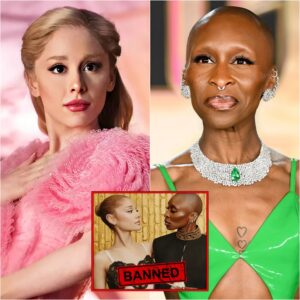
In the kaleidoscopic whirlwind of Oz, where emerald spires pierce cotton-candy skies and the air hums with the promise of defiance and dreams, Universal Pictures has conjured a sequel that’s not just defying gravity—it’s shattering records. Wicked: For Good, the electrifying second chapter of the two-part musical adaptation of Stephen Schwartz and Winnie Holzman’s Broadway juggernaut, has rocketed to $226 million at the global box office in its opening weekend alone, eclipsing its predecessor’s debut and injecting a much-needed jolt into 2025’s sputtering theatrical landscape. Starring Ariana Grande as the bubbly yet burdened Glinda the Good and Cynthia Erivo as the green-skinned outcast Elphaba Thropp, the film—directed with lavish spectacle by Jon M. Chu—opened on November 21 amid a frenzy of fan events, sing-along screenings, and viral TikTok recreations of “For Good.” With a reported production budget of $150 million (part of a combined $300 million for the duology), the movie has already recouped its costs and is barreling toward a billion-dollar milestone, analysts predict. “This isn’t a sequel; it’s a coronation,” one industry insider quipped at the New York premiere, where Grande and Erivo held court in gowns dripping with Swarovski crystals. As holiday crowds flock to theaters, Wicked: For Good isn’t just entertaining—it’s a cultural cyclone, blending heart-soaring anthems, visual wizardry, and a message of radical empathy that’s resonating louder than ever in a divided world.
The journey to this emerald-hued triumph began over a decade ago, when Universal acquired the screen rights to Wicked, the 2003 Broadway smash that’s grossed $5.4 billion worldwide and shows no signs of closing. The musical, a prequel to L. Frank Baum’s The Wonderful Wizard of Oz, flips the script on the Wicked Witch of the West, portraying Elphaba as a misunderstood prodigy whose “wickedness” stems from societal bigotry against her emerald hue and innate magical prowess. Glinda, her unlikely sorority sister, evolves from shallow socialite to conflicted icon of “goodness.” The first film, Wicked, enchanted audiences in November 2024 with a $114 million domestic opening, ballooning to $759 million globally and earning Oscar nods for Grande’s vocal fireworks and Chu’s kinetic direction. But splitting the story—ending Part One on the cusp of “Defying Gravity”—was a gamble that paid off spectacularly, leaving fans dangling like Dorothy’s house over Munchkinland.
Wicked: For Good picks up the thread with ferocious momentum, plunging deeper into the heart of Oz’s unraveling. Elphaba (Erivo), now branded the Wicked Witch after her airborne rebellion, retreats to the shadowed forests of the West, allying with the oppressed Animals—those voiceless beasts stripped of speech by the Wizard’s regime. Her quest to expose the fraud at Oz’s helm collides with Glinda’s (Grande) gilded ascent to the Emerald City’s throne, where she’s Glinda the Good, a porcelain-perfect propagandist masking her loyalty to her exiled friend. As an angry mob, whipped into frenzy by the Wizard (a scheming Jeff Goldblum) and the sorceress Madame Morrible (a deliciously devious Michelle Yeoh), hunts the “witch,” the duo must reunite for a final stand. The narrative crescendos toward the musical’s iconic finale, “For Good,” a duet that interrogates change, forgiveness, and the indelible imprints we leave on one another’s souls. New songs by Schwartz infuse fresh fire— a haunting ballad for Elphaba’s Animal ally Fiyero (Jonathan Bailey), turned into a scarecrow by Morrible’s curse, and a show-stopping ensemble number in the Emerald Palace that blends ballet, pyrotechnics, and a chorus of 200 dancers swirling through holographic projections of Oz’s fractured history.
Chu, whose Crazy Rich Asians proved his flair for opulent ensembles, amplifies the spectacle to operatic scales. Filmed across London’s Leavesden Studios and the windswept cliffs of Ireland’s Aran Islands, the production boasts a $150 million price tag that manifests in jaw-dropping set pieces: a cyclone-ravaged Munchkinland rebuilt as a refugee camp, the Emerald City’s spires constructed from 3D-printed jade composites, and a flying-monkey sequence deploying practical wirework with VFX overlays that make Avatar‘s Na’vi look quaint. Cinematographer Alice Brooks bathes the frame in jewel-toned reveries—emerald greens bleeding into bubblegum pinks—while composer Stephen Schwartz’s score, conducted live on set, swells with orchestral grandeur. The budget’s heft covers not just visuals but vocal virtuosity: Grande and Erivo underwent months of training with Broadway vets, their harmonies layered in Dolby Atmos for theaters equipped with the format. “We didn’t just adapt a musical; we rebuilt Oz as a living, breathing world,” Chu enthused at the Los Angeles premiere, where a red carpet unfurled like the Yellow Brick Road, lined with green carpet and apple motifs.
No discussion of Wicked: For Good orbits far from its twin North Stars: Ariana Grande and Cynthia Erivo, whose alchemy has critics coining “GrivO” as the new power duo. Grande, 32, channels Glinda with effervescent precision—a whirlwind of wit and whimsy that masks seismic self-doubt. Fresh from her Eternal Sunshine tour, where she belted “Popular” to sold-out arenas, Grande infuses the role with pop-star panache: her Glinda flounces through scenes in Posen gowns inflated with LED-lit tulle, her soprano soaring on “No One Mourns the Wicked” reprise like a siren call. But it’s the vulnerability that elevates her—tear-streaked close-ups during a clandestine reunion with Elphaba reveal the good witch’s terror of authenticity. “Glinda’s my mirror to fame’s facade,” Grande shared in a Vogue cover story, her ponytail a nod to the character’s iconic updo. Erivo, 38, the Tony-winning The Color Purple phenom, embodies Elphaba with raw, revolutionary fire. Her green-skinned transformation—via custom prosthetics and motion-capture suits—becomes a metaphor for otherness, her belter’s timbre cracking with fury on “The Wizard and I” sequel. Erivo’s physicality dazzles: soaring on broomsticks via harness rigs, she conveys Elphaba’s isolation with balletic grace, her eyes—framed by Idina Menzel’s blessing—burning with unquenched zeal. “Cyn’s Elphaba isn’t wicked; she’s wildfire,” co-star Bailey raved on The Tonight Show. Their chemistry? Explosive—duets like “As Long as You’re Mine” crackle with sisterly sapphic tension, drawing queer readings that have fueled fan art tsunamis on Tumblr.
The supporting cast weaves a tapestry of treachery and tenderness. Jeff Goldblum slithers as the Wizard, his velvet baritone twisting platitudes into propaganda, a far cry from his Thor: Ragnarok ham. Michelle Yeoh, Oscar in hand from Everything Everywhere All at Once, vamps as Madame Morrible, her telekinetic tirades a blend of sorcery and spite. Jonathan Bailey, Bridgerton’s brooding beau, brings brooding charisma to Fiyero, his scarecrow metamorphosis a poignant pivot from rake to rebel. Marissa Bode shines as Nessarose, Elphaba’s wheelchair-bound sister, her “Wheelchair Number” a gravity-defying dance that reimagines disability as defiant. And in a meta-cameo, original Broadway Elphaba Idina Menzel voices a spectral advisor, her “Let It Go” Easter egg sending superfans into hysterics. Ethan Slater, Grande’s real-life paramour, twinkles as the tin-man-esque Boq, his comic timing a lifeline amid the pathos.
Box-office sorcery has been Wicked‘s hallmark, and For Good is no exception. Launching November 21 with early Prime member previews on Monday—raking $12.6 million before Thursday’s traditional kickoff—the film tallied $68.6 million on opening day alone, the highest of 2025. Domestic totals hit $150 million over the weekend, with international markets adding $76 million from 78 territories, for a global $226 million splashdown—the fourth-biggest debut of the year, trailing only Lilo & Stitch‘s remake and Jurassic and Minecraft sequels. Against its $150 million budget, that’s instant profitability; factoring theater splits and marketing (another $100 million estimated), break-even hovers at $375 million, a threshold it’s poised to vault. CinemaScore’s “A” grade mirrors Part One’s acclaim, with 30% of screenings in premium formats boosting per-ticket averages. “Wicked: For Good” outpaced its predecessor’s $164 million global bow, proving the split-strategy’s genius: audiences, hooked on cliffhangers, returned en masse, many in group costumes channeling Elphaba’s cape or Glinda’s tiara.
The surge arrives as Hollywood licks wounds from a desultory fall—superhero slumps and strikes’ echoes yielding a 5% dip from 2024. Yet Wicked recaptures magic, its soundtrack surging to Spotify’s top spot (over 50 million streams in 48 hours) and merchandise—emerald wands, broomstick keychains—flying off shelves at Target. Social media’s a cauldron: #WickedForGood amassed 1.2 million posts, from tearful reaction vids (“Cyn’s ‘For Good’ broke me!”) to conspiracy theories about hidden Wizard of Oz nods. Critics, post-TIFF world premiere (where it snagged the People’s Choice), laud its emotional heft: The Hollywood Reporter called it “a ballooning balloon of joy and justice,” while IndieWire praised the duo’s “vocal Vesuvius.” Detractors? A smattering gripe the runtime (2 hours 45 minutes) as bloated, but word-of-mouth—fueled by family outings—promises legs through Christmas, potentially challenging Ne Zha II‘s $1.2 billion throne.
Production was a Herculean harmony, wrapping in June 2024 after COVID delays and rain-soaked Irish shoots. Chu, a Crazy Rich alum, fostered a “familia” vibe: daily vocal circles, Grande’s ponytail braiding sessions for Erivo, and Goldblum’s improv jazzing up Wizard rants. The score, recorded with the London Symphony, layers Schwartz’s originals with Pasek-Paul additions, while VFX house DNEG crafted 1,500 flying shots. Budget scrutiny? Universal’s gamble paid, with IMAX revenue alone topping $20 million domestically.
As Thanksgiving looms—pitted against Zootopia 2‘s Wednesday bow—Wicked: For Good heralds a holiday haul rivaling last year’s $433 million record. Projections eye $800 million-plus by New Year’s, with a third act? Unlikely, but Broadway’s endless run whispers sequels. For Grande and Erivo, it’s validation: from pop princess to witch icon, their sisterhood a beacon. “We changed each other—for good,” Erivo posted post-premiere, a lyric made manifest. In Oz’s fractured firmament, Wicked: For Good isn’t just a hit; it’s a hex broken, a spell that lingers. Grab your broom— the skies are calling, and they’re emerald with promise.