Film enthusiasts seeking an emotionally resonant experience need look no further than Mothering Sunday, the critically acclaimed period drama that has been hailed as heartbreaking and unforgettable. Directed by Eva Husson and adapted from Graham Swift’s bestselling 2016 novella, this beautifully crafted film transports viewers to the lingering shadows of World War I England, where love, loss, and quiet resilience intertwine in a story that leaves audiences breathless long after the credits roll. Now streaming on platforms like Hulu, Netflix in select regions, and others, it’s the perfect time to immerse yourself in this exquisite tale of forbidden passion and personal rebirth.
At the center of Mothering Sunday is Jane Fairchild, portrayed with luminous vulnerability by Australian actress Odessa Young. Jane is a young housemaid and orphan working for the affluent Niven family in the English countryside. On a sun-drenched Mothering Sunday in 1924—a traditional day off for domestic servants—Jane finds herself alone while her employers, the grieving Mr. and Mrs. Niven (played by Colin Firth and Olivia Colman), attend a gathering with neighbors. This rare freedom allows Jane to spend intimate hours with her secret lover, Paul Sheringham (Josh O’Connor), the charming heir from a nearby estate who is soon to marry a woman of his own social class.

Their afternoon together is one of passionate abandon, filled with tender moments and unspoken understanding, set against the opulent backdrop of Paul’s empty family home. Jane wanders freely, exploring rooms filled with books and artifacts that hint at a world beyond her station, her nudity symbolizing a fleeting liberation from societal constraints. Yet beneath the sensuality lies a profound melancholy: the war has claimed countless young lives, leaving families like the Nivens and Sheringhams shattered, with surviving sons bearing impossible burdens.
The film masterfully weaves this pivotal day with glimpses into Jane’s future, revealing her transformation into a successful writer. In later years, she forms a loving relationship with a philosopher named Donald (Ṣọpẹ́ Dìrísù), finding stability and intellectual companionship. An elderly Jane, brought to life in a poignant cameo by the legendary Glenda Jackson, reflects on her life with wry wisdom, having kept the secrets of that fateful day buried deep within.
What elevates Mothering Sunday to something truly special is its exploration of grief in a society bound by stiff-upper-lip restraint. The upper classes, devastated by the loss of sons in the trenches, navigate their sorrow through polite silences and forced normalcy. Firth’s Godfrey Niven embodies this with subtle devastation—his vacant smiles and awkward platitudes masking profound pain. Colman, in a heartbreakingly restrained performance, portrays Clarrie Niven as flinty and withdrawn, her occasional flashes of bitterness revealing the raw wound beneath.
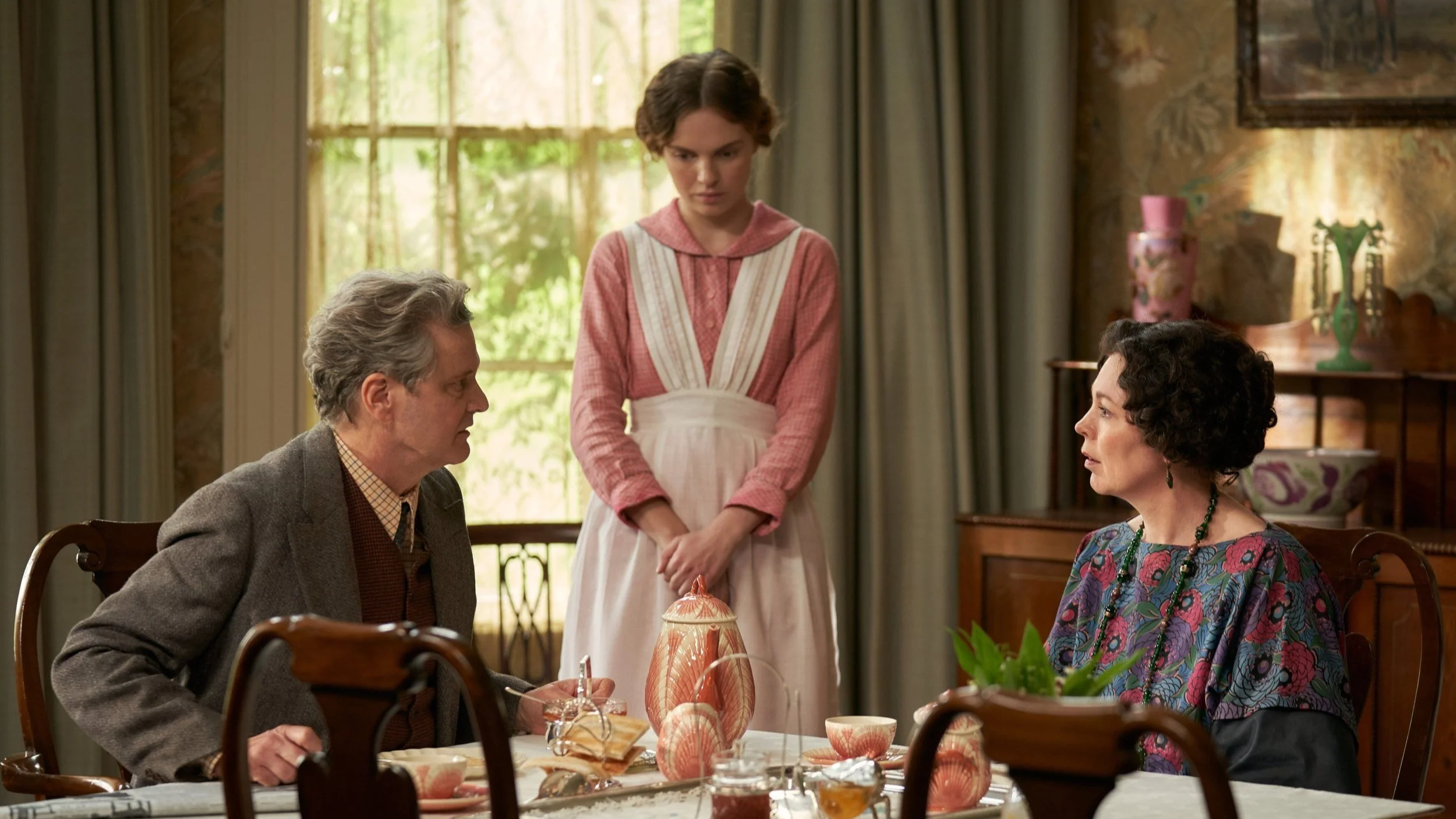
These supporting roles, though limited in screen time, pack an emotional punch, underscoring the film’s themes of class divides, unspoken trauma, and the ways people cope—or fail to cope—with irreparable loss.
Husson’s direction brings a sensual, almost dreamlike quality to the proceedings, with cinematographer Jamie D. Ramsay capturing the golden light of rural England in breathtaking shots. The English countryside becomes a character in itself—lush fields, grand estates, and intimate interiors that contrast the characters’ inner turmoil. Costume designer Sandy Powell outfits the cast in period-appropriate elegance, while Morgan Kibby’s score adds layers of melancholy and yearning.
The screenplay by Alice Birch (Lady Macbeth, Normal People) faithfully honors Swift’s novella, which unfolds primarily through Jane’s introspective voice. While the film expands the timeline for visual storytelling, it retains the source material’s meditative pace and philosophical undertones. Swift’s novel delves deeply into memory, writing as catharsis, and the fleeting nature of joy amid pervasive sorrow. The adaptation translates this through nonlinear jumps that mirror the workings of recollection—moments from 1924 bleed into later decades, emphasizing how one day can define a lifetime.
Critics have praised the film for its emotional depth and stellar ensemble. Premiering at the Cannes Film Festival in 2021, it earned acclaim for subverting traditional period drama tropes. Rather than coy glances and repressed longing, Mothering Sunday embraces frank sensuality, portraying the lovers’ physical connection with honesty and beauty. Young’s Jane is a revelation—curious, resilient, and quietly ambitious—while O’Connor brings charisma and tragedy to Paul, making their doomed romance all the more poignant.

Supporting players like Dìrísù add warmth and contrast in the later timelines, highlighting Jane’s growth. Jackson’s brief appearance as the aged author delivers a powerful bookend, her sharp delivery reminding viewers of enduring spirit amid reflection.
Though some have noted the film’s deliberate pacing and occasional emotional distance—mirroring the characters’ own restraint—the overall consensus celebrates its artistry. It’s a story not of grand gestures but quiet revelations: how loss shapes us, how love endures in memory, and how art becomes a vessel for processing the unprocessable.
In an era of fast-paced blockbusters, Mothering Sunday offers a refreshing antidote—a thoughtful, visually stunning meditation on the human heart. Its themes of rebuilding after devastation feel timeless, especially in a post-war setting that echoes broader human experiences of grief and renewal. For fans of literary adaptations like The Remains of the Day or Atonement, this film delivers similar introspection with a more intimate scale.
Now readily available for streaming, there’s no better moment to discover—or rediscover—this gem. Whether curled up on a quiet evening or seeking something profound amid holiday bustle, Mothering Sunday promises to linger in your thoughts, evoking tears, sighs, and a deep appreciation for life’s fragile beauties. It’s a cinematic experience that captures the essence of hope rising from ashes—a poignant reminder that even in the darkest times, stories of love and survival endure.