In the dim underbelly of modern London, where cultural traditions clash with the freedoms of a multicultural metropolis, few stories cut as deeply as that of Banaz Mahmod—a vibrant 20-year-old whose dream of love ended in unimaginable horror. Netflix’s gripping two-part drama Honour, which stormed the platform’s top charts upon its July 2024 arrival, lays bare this heartbreaking true tale of an “honour” killing that shocked the United Kingdom in 2006. Viewers across the globe have been left in tears, their screens blurred by sobs and their feeds flooded with calls for justice and awareness. “I cried… so so sad. So so evil,” one anguished fan posted on social media, echoing a chorus of heartbreak that has propelled the series to viral infamy. But beyond the raw emotion, Honour serves as a stark indictment of systemic failures, patriarchal control, and the silent complicity that allows such atrocities to fester in plain sight. As the credits roll on this unflinching procedural, one question lingers like a wound: How many more Banazes must suffer before “honour” loses its deadly grip?
The series, originally crafted for ITV in 2020 by acclaimed screenwriter Gwyneth Hughes, draws directly from the real-life accounts of those entangled in the tragedy. Hughes, known for her incisive explorations of power and prejudice in hits like The Hours and The English Game, consulted intimately with key survivors, including Banaz’s brave sister Bekhal Mahmod, who remains in witness protection to this day. The narrative unfolds not as a sensationalized biopic but as a taut police investigation, centering on the relentless pursuit of truth by Detective Chief Inspector Caroline Goode. This choice—to frame the story through the lens of law enforcement—has sparked debate, with some praising its procedural rigor and others lamenting that Banaz herself feels like a spectral presence rather than the beating heart. Yet, in its 90-odd minutes across two episodes, Honour masterfully balances forensic detail with profound human cost, transforming a cold case file into a visceral cry against violence cloaked in cultural justification.
At the story’s core is Banaz Mahmod, a young Iraqi Kurdish woman whose family fled Saddam Hussein’s regime in the late 1990s, seeking refuge in the working-class enclave of Mitcham, South London. Portrayed in fleeting but poignant flashbacks by Turkish-German actress Buket Kömür—making her English-language debut after roles in the German series Generation Z—Banaz emerges as a beacon of quiet rebellion. Married off at 17 in a forced union to her 27-year-old cousin, a man who subjected her to years of rape and abuse, Banaz endured in silence, her spirit slowly eroding under the weight of familial expectations. By 2005, at just 19, she mustered the courage to leave, seeking a divorce through community elders only to face scorn and threats. Her crime? Falling in love with Rahmat Suleimani, an Iranian Kurd five years her senior, whose affections offered a glimpse of autonomy in a life scripted by others.
Kömür’s performance, though brief, is a masterstroke of understatement. With wide, haunted eyes and a tentative smile that blooms only in stolen moments with Rahmat (played with tender intensity by rising star Moe Bar-El, whose soulful gaze recalls a young Riz Ahmed), she captures Banaz’s fragility and fire. Flashbacks depict her desperate pleas to police—four harrowing visits in early 2006, where she named her would-be killers: her father Mahmod, uncle Ari, and cousins—met with bureaucratic indifference. “They tried to arrest HER,” one viewer fumed online, highlighting the real-life institutional misogyny that dismissed her warnings as “domestic squabbles.” On January 29, 2006, Banaz vanished after a family gathering, her body later discovered in a suitcase buried in a Birmingham garden—strangled, tortured, and discarded like refuse. The autopsy revealed a death born of calculated cruelty, her final hours a nightmare of violation orchestrated to “cleanse” the family’s shame.
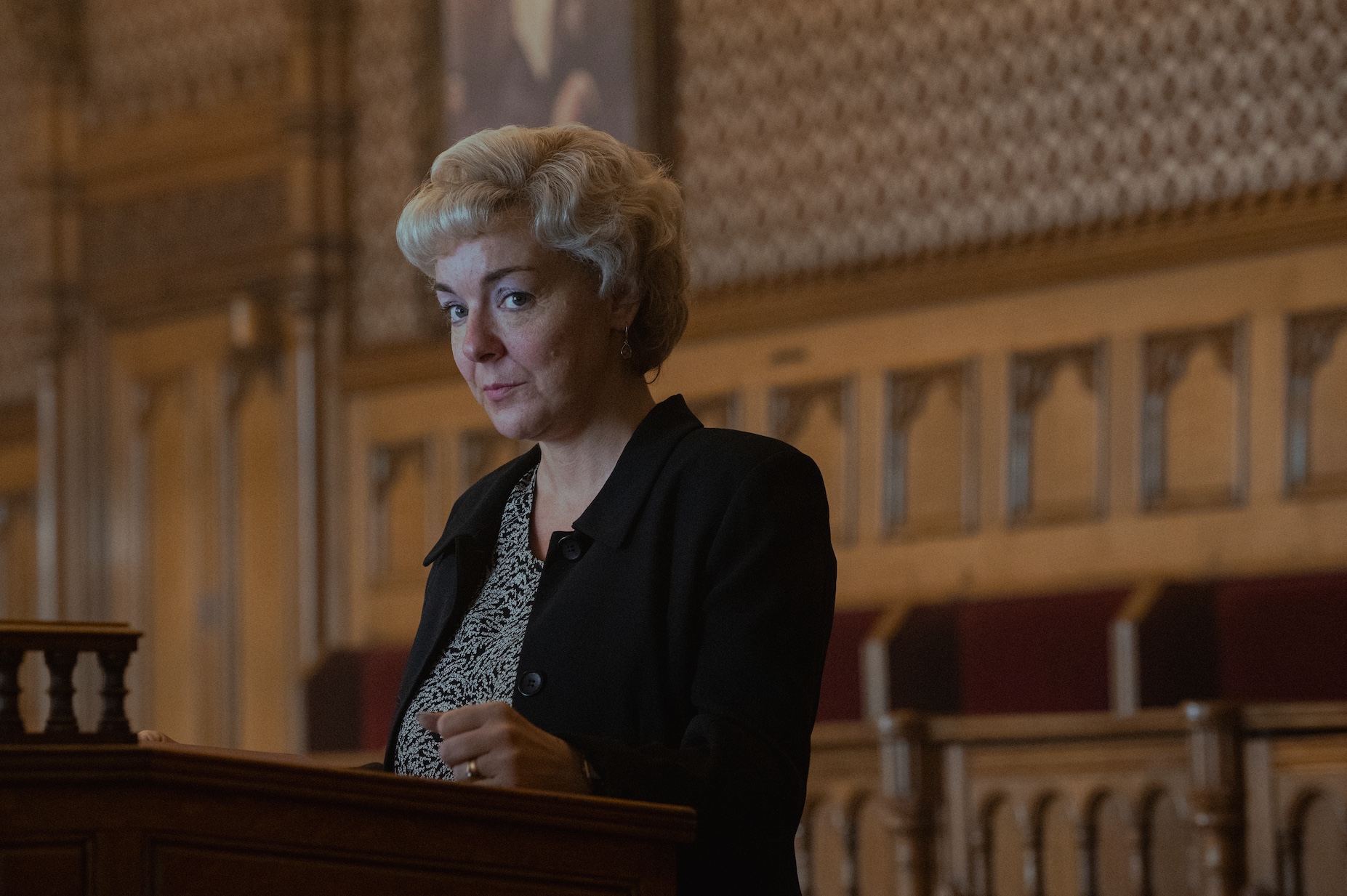
Enter DCI Caroline Goode, the newly promoted force of nature who inherits the missing persons case and transforms it into a murder hunt. Embodied by Keeley Hawes with a ferocity that has become her signature—think her steely resolve in Bodyguard or Line of Duty—Goode is the series’ moral anchor, a woman whose empathy fuels an unyielding drive for accountability. Hawes, 49 at the time of filming, brings a layered authenticity to the role, drawing from Goode’s own memoir Honour: Achieving Justice for Banaz Mahmod. Her Caroline is no infallible hero; she’s a mother juggling childcare crises amid late-night stakeouts, her tears a testament to the toll of bearing witness to inhumanity. “These are real people,” Hawes reflected in interviews, underscoring the weight of portraying a living legend who, after 33 years with the Met Police, retired with a Queen’s Police Medal for her groundbreaking work on honour-based violence.
Flanking Goode is her crack team from the Homicide and Serious Crime Command: the bull-headed DS Andy Craig (Mark Stanley, channeling the quiet menace he honed as Game of Thrones’ Grenn), the empathetic DS Stuart Reeves (Michael Jibson, whose affable everyman vibe from The Split grounds the procedural beats), and the sharp-witted DC Sarah Raymond (Amanda Lawrence, delivering razor-edged wit amid the grimness, fresh off her BAFTA-nominated turn in No Offence). Their dynamic—camaraderie laced with gallows humor—provides rare breaths of levity in an otherwise suffocating tale. Stanley’s Craig, in particular, evolves from skeptic to avenger, his interrogation scenes crackling with suppressed rage as he dismantles the “wall of silence” erected by the Mahmod clan.
The perpetrators, depicted with chilling restraint, form a rogue’s gallery of patriarchal enforcers. Talid Hussain commands as Mahmod Mahmod, Banaz’s father, his patriarchal bluster masking a coward’s desperation to preserve face among his diaspora community. As uncle Ari Agha Mahmod, the icy Nasser Memarzia (veteran of The Bill and Doctor Who) exudes a venomous charisma, recruiting cousins and acquaintances for the deed with the casual efficiency of a business transaction. Their real-life convictions—life sentences for Mahmod and Ari, alongside jail terms for cousins Omar Hussain, Mohammed Saleh Ali, and accomplice Mohamad Marid Hama—underscore the series’ triumphant close, but not without exposing the conspiracy’s breadth: a network of fear that silenced neighbors and kin alike.
Looming largest in spirit is Bekhal Mahmod, Banaz’s elder sister and the family’s defiant outlier. Having fled home in 1999 at 18, enduring her own beatings and isolation, Bekhal (portrayed with raw vulnerability by Rhianne Barreto of The Outlaws fame) becomes the whistleblower whose testimony shatters the facade. Barreto, whose expressive features flicker between terror and triumph, nails Bekhal’s survivor’s edge— a woman in witness protection, forever scarred yet unbowed. “Back home we were controlled,” Bekhal recounted in real life, her ITV portrayal a cathartic reclaiming of agency. Supporting turns add depth: Aysha Kala as the cousins’ reluctant wives, their sidelong glances betraying quiet complicity; and Saman Al-Mansour as the community imam, whose platitudes mask deeper hypocrisies.
Director Richard Laxton (A Very English Scandal) helms the production with a restraint that amplifies its power, favoring shadowy interiors and rain-slicked streets over exploitative gore. Cinematographer John Lee captures London’s duality: the multicultural vibrancy of South Asian markets clashing with the claustrophobia of terraced homes where secrets fester. The score, a brooding pulse of strings and percussion by Debbie Wiseman, evokes the cultural rhythms twisted into tragedy—dhol drums underscoring interrogations like a dirge. Filmed in 2019 across London and Birmingham, the series clocks in at under two hours, its brisk pacing mirroring Goode’s urgency: from Rahmat’s frantic missing persons report to suitcase exhumations and transcontinental arrests (the killers fled to Iraq, only to be extradited).
Honour‘s Netflix debut on July 10, 2024, catapulted it to the UK and Ireland’s No. 1 spot, amassing millions of views and a pristine 100% Rotten Tomatoes score from critics. “A stripped-down procedural with tension and pace,” raved The Guardian, awarding four stars for its “haunting” authenticity. The Sunday Times lauded Barreto’s “sensational turn,” while audiences, many discovering the case anew, poured out grief online. #HonourNetflix trended with over 100,000 mentions, blending eulogies—”Rest in peace, Banaz; your story will not be silenced”—with outrage over unchanged realities. Honour-based abuses persist, with UK police logging nearly 5,000 incidents yearly, including 10-15 murders. Viewers spotlighted parallels to cases like that of Sara Sharif in 2023, urging policy reforms.
Yet, acclaim hasn’t been unanimous. Early backlash decried a “white saviour” trope, with Goode’s spotlight allegedly sidelining Banaz’s voice—a critique Hughes addressed by centering Bekhal’s input. Anita Singh of The Telegraph noted Banaz as “a bit part in her own murder,” though the series counters with voiceover snippets from her police videos, her words a haunting refrain: “They’re going to kill me.” Hawes herself championed sensitivity, collaborating with honour violence charities like the Karma Nirvana Project to ensure respectful portrayal.
As of November 23, 2025, Honour remains streamable on Netflix in select regions, though whispers of licensing expirations loom—much like the June 2025 UK pullout that prompted a frantic binge wave. For American audiences, it’s a permanent fixture, bundled with true-crime staples like The Keepers. The series ends on a note of hard-won justice: Goode’s team in a Birmingham lockup, cuffs clicking on the guilty, Bekhal’s silhouette fading into protective anonymity. But the final frame—a photo of the real Banaz, smiling defiantly—delivers the gut punch. She was a dreamer, a daughter, a woman who dared to choose love. Her murder wasn’t honour; it was theft.
In resurrecting her story, Honour doesn’t just entertain—it excavates, forcing confrontation with the shadows of diaspora life where tradition becomes tyranny. Viewers aren’t just heartbroken; they’re activated, petitioning for better safeguards and sharing resources for at-risk women. Banaz Mahmod’s legacy, once buried in a suitcase, now echoes worldwide. As one fan tweeted amid tears: “She won’t be the last—unless we make her the turning point.” In a streaming sea of escapism, Honour demands we look, listen, and act. Stream it, but brace yourself: This isn’t fiction. It’s a reckoning.