In the glittering aftermath of The Crown‘s curtain call, where royal scandals and stiff upper lips reigned supreme for six seasons, Netflix has pulled off a sly heist from the vaults of British television history. On a unassuming December morning in 2025—mere weeks after the streamer waved goodbye to its modern monarchy epic—the platform quietly unfurled all three seasons of Victoria, a lavish historical saga that’s exploding onto global screens like a coronation procession through fog-shrouded London streets. Created by the sharp-witted Daisy Goodwin, whose pen has a knack for turning dusty annals into pulse-pounding page-turners, this isn’t just a period piece; it’s a velvet-gloved gut punch to the heart, blending the claustrophobic intrigue of Wolf Hall with the sprawling family feuds of Downton Abbey. Fans of Hilary Mantel’s Tudor thorns and Julian Fellowes’ Edwardian epics are already anointing it “perfect”—a binge that devours weekends whole, leaving you adrift in silk gowns and whispered betrayals.
Picture the scene: it’s 1837, and the death knell for King William IV echoes through Kensington Palace like a tolling bell. In her cramped, candlelit bedroom, 18-year-old Alexandrina Victoria—soon to shed the cumbersome moniker for the simpler, steelier “Victoria”—clutches her diary, her world upended. She’s been a pawn her entire life, shuttled between her overbearing mother, the Duchess of Kent (Catherine Flemming, all icy maternal menace), and the scheming Sir John Conroy (Paul Rhys, slithering with ambition like oil on water), who dreams of puppeteering the throne from the shadows. But as the crown descends—literally, in a ceremony so fraught it’s shot like a high-stakes heist—Victoria seizes her moment. No more “Kensington System,” that suffocating regime of isolation and control. She’s queen now, and the court, that viper’s nest of Whigs, Tories, and titled vultures, must bend the knee. From this electric opener, Victoria unfurls like a corseted exhale: a young woman clawing for autonomy in a man’s world, where every curtsy hides a dagger and every alliance is laced with lust.
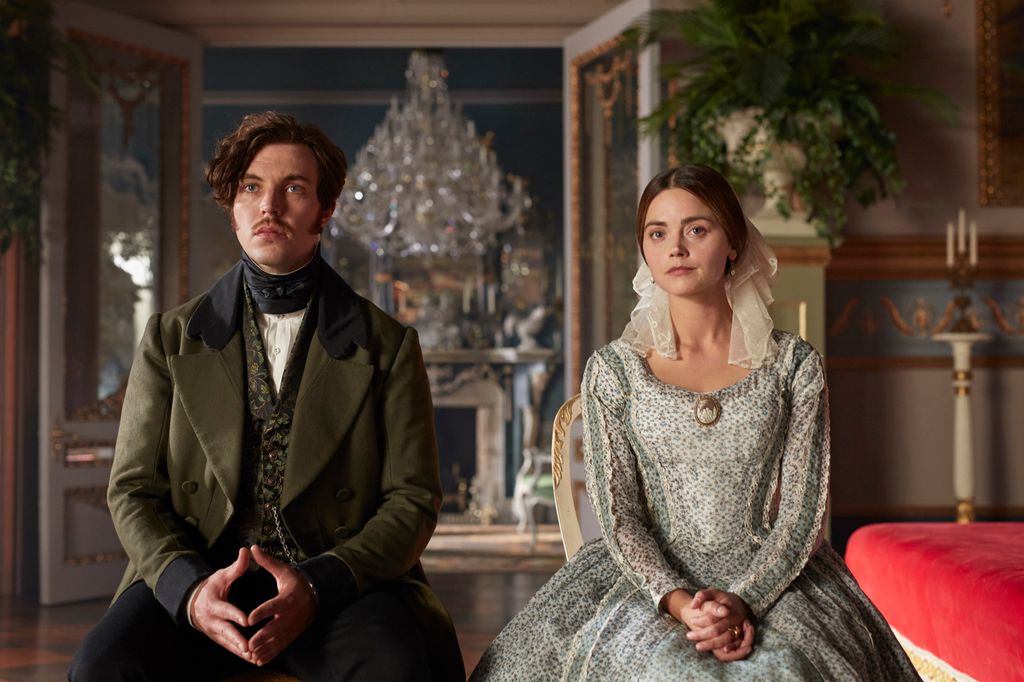
At the series’ luminous core is Jenna Coleman, the Doctor Who alum whose petite frame belies a volcanic intensity that makes her the undisputed sovereign of this screen. Coleman’s Victoria isn’t the dour, black-veiled matriarch of history books—the widow who mourned Albert for four decades and stamped her name on an entire era. No, this is the firebrand girl-queen: impulsive, petulant, fiercely intelligent, with eyes that spark like flint on steel. Her performance is a career-defining tour de force, a masterclass in emotional alchemy that transmutes historical fact into raw, relatable fury. Watch her in Season 1’s pivotal bedroom standoff, where she defies her mother and Conroy with a single, trembling declaration of independence—”I will be queen”—and you’ll feel the room’s air crackle. It’s the kind of scene that Wolf Hall devotees savor: understated power plays, where silence screams louder than soliloquies. Coleman’s research was obsessive; she pored over the real Victoria’s diaries, those 141 volumes of unfiltered royal venting, infusing her portrayal with the queen’s signature blend of naivety and nerve. “There’s so much wealth in all of the moment,” Coleman once reflected, and it shows—every glance, every gasp, every regal tilt of the chin is laced with the weight of a girl becoming legend.
Flanking her is a gallery of rogues and romantics that could fill a royal portrait hall. Rufus Sewell slinks through Season 1 as Lord Melbourne, the silver-tongued Prime Minister whose avuncular charm masks a deeper, almost paternal devotion. Their bond—platonic yet perilously intimate—ignites the screen with forbidden-fruit tension, a slow-simmering flirtation that has Downton fans swooning over its upstairs-downstairs echoes. Melbourne’s the mentor who teaches her the chessboard of politics, only to watch her outmaneuver him with youthful audacity. Then comes Tom Hughes as Prince Albert, the bespectacled German prince whose arrival in Season 1’s finale flips the board. Hughes imbues Albert with a quiet radicalism—think progressive blueprints for public health amid cholera outbreaks and a passion for the arts that clashes with Victoria’s more impulsive heart. Their courtship, courtship? It’s a full-throated romance that blooms across seasons: stolen kisses in moonlit gardens, jealous spats over protocol, and a wedding in Season 2 that’s equal parts fairy tale and political chess. Off-screen, Coleman and Hughes’s real-life spark (they dated from 2016 to 2021) bleeds into the chemistry, making their yearning feel palpably, achingly real.
The ensemble deepens the drama without ever overshadowing it. Daniela Holtz’s Baroness Lehzen, Victoria’s devoted German governess, is a maternal surrogate turned tragic figure, her loyalty curdling into overprotectiveness that nearly topples the throne. Nell Hudson shines as Nancy Skerrett, the queen’s quick-witted dresser whose clandestine affair with royal chef Francatelli (Ferdinand Kingsley, all brooding Italian flair) adds a delicious downstairs subplot—think Downton‘s Bates and Anna, but with more flour-dusted trysts in the scullery. And don’t sleep on the antagonists: Flemming’s Duchess is a portrait of embittered entitlement, her Kensington grip tightening like a noose, while Rhys’s Conroy oozes the oily menace of a man who’d sell his soul for a regency. Later seasons introduce fresh blood—David Oakes as the rakish Prince Ernest, Albert’s brother, whose scandals threaten to engulf the court; Eve Myles as the fiery Irish actress Nellie Clifden, whose affair with the couple’s eldest son sparks constitutional crisis in Season 3. It’s a tapestry of tangled loyalties, where servants scheme alongside sovereigns, and every character arc mirrors the era’s seismic shifts: from Chartist riots to the Irish potato famine, woven in with a subtlety that rewards the history buffs.
What elevates Victoria to obsession status is its unapologetic embrace of the soapy heart beneath the historical husk. Goodwin, drawing from her own poetic roots (she penned the lyrics to “America the Beautiful”), scripts episodes that pulse with emotional velocity—opulent balls where waltzes mask whispered seductions, parliamentary showdowns that crackle like thunder over the Thames, and domestic tiffs that humanize the icons. Season 1 hurtles through Victoria’s ascension, her “bedchamber crisis” with Melbourne, and the electric charge of meeting Albert at Sidmouth, all shot with a kinetic intimacy that makes the palace feel like a pressure cooker. By Season 2, the focus sharpens on marital bliss and mayhem: the birth of their first child, Vicky, amid assassination attempts and Albert’s frustrated quest for purpose, culminating in his orchestration of the Great Exhibition—a glittering spectacle of innovation that symbolizes their shared vision for a modern Britain. Season 3, the richest yet, plunges into mid-reign turbulence: the Bedchamber Crisis redux, the “Young England” movement’s romantic meddling, and the heart-wrenching foreshadowing of Albert’s frailty, ending on a note of poignant uncertainty in 1851.
Visually, it’s a feast for the senses, courtesy of director Ollie Uphoff and a production design team that spares no silk or sparkle. Filmed across lush English estates like Harewood House (standing in for Buckingham) and the opulent Belvoir Castle, every frame drips with authenticity: corsets cinched to breath-stealing perfection, gaslit salons flickering like captured stars, and landscapes that sweep from Dover’s chalk cliffs to the fog-choked docks of Greenwich. The costumes—over 300 original pieces per season—are a Downton-level triumph, with Coleman’s Victoria evolving from girlish muslins to regal crinolines that rustle like secrets. Geoffrey Burgon’s score weaves harp and harpsichord into a soundtrack that’s as romantic as it is restless, swelling during Albert and Victoria’s first dance (a real historical waltz that scandalized the court) and sobering into strings for the era’s darker undercurrents: the hungry ’45 famine, the revolutionary fervor rippling from Paris.
Reception? It’s a groundswell that’s turning Victoria into Netflix’s sleeper sovereign. Critics, long starved for a period drama that marries Wolf Hall‘s intellectual bite with Downton‘s emotional sprawl, are effusive: an 87% on Rotten Tomatoes, with Collider hailing it as “a serene tale of love and the monarchy” and The Guardian praising its “addictive” blend of fact and fancy. Fans are flooding X with fervor—”More enjoyable than The Crown,” one declares, while another raves about the “tension and yearning” between Coleman and Hughes that outshines even Bridgerton‘s heat. In the UK, where it originally aired on ITV to 6 million premiere viewers, it’s reclaiming hearts on Netflix, climbing Top 10 charts amid holiday binges. American audiences, via PBS Masterpiece, have long cherished it as a tonic to Tudor fatigue, but this global drop feels like destiny—especially post-The Crown, where Elizabeth’s reserve contrasts Victoria’s vivacity. “It’s the royal fix we’ve been craving,” a Wolf Hall subreddit thread buzzes, threads dissecting Lehzen’s arc like Mantel code.
Yet Victoria‘s true sorcery lies in its relevance, a mirror to our own era of queens and crises. It’s a feminist fable wrapped in 19th-century finery: a girl boss dismantling the patriarchy one decree at a time, navigating #MeToo-esque manipulations from Conroy and the era’s glass ceilings in Parliament. Albert isn’t a consort in waiting; he’s a partner who challenges her, their power struggles echoing modern marital negotiations. And amid the splendor, Goodwin doesn’t shy from the grit—the human cost of empire, the Chartists’ desperate petitions marching on Parliament, the quiet racism shading colonial policies. It’s Downton with depth, Wolf Hall with heart: a reminder that history isn’t marble statues, but flesh-and-blood furies forging their fates.
As the final episode fades—Albert’s shadow lengthening over the Crystal Palace’s glass spires—you’ll emerge dazed, diary in hand, plotting your own ascension. No Season 4 looms (ITV paused in 2021, though Coleman’s hinted at a return when she’s “aged a bit more”), but these three seasons are a complete realm: 24 episodes of unadulterated immersion. Forget the fruitcake and family feuds; this is your holiday hijack. Wolf Hall whisperers, Downton die-hards, Crown casualties—clear your queues. Jenna Coleman’s Victoria isn’t just a performance; it’s a proclamation. Long may she binge.