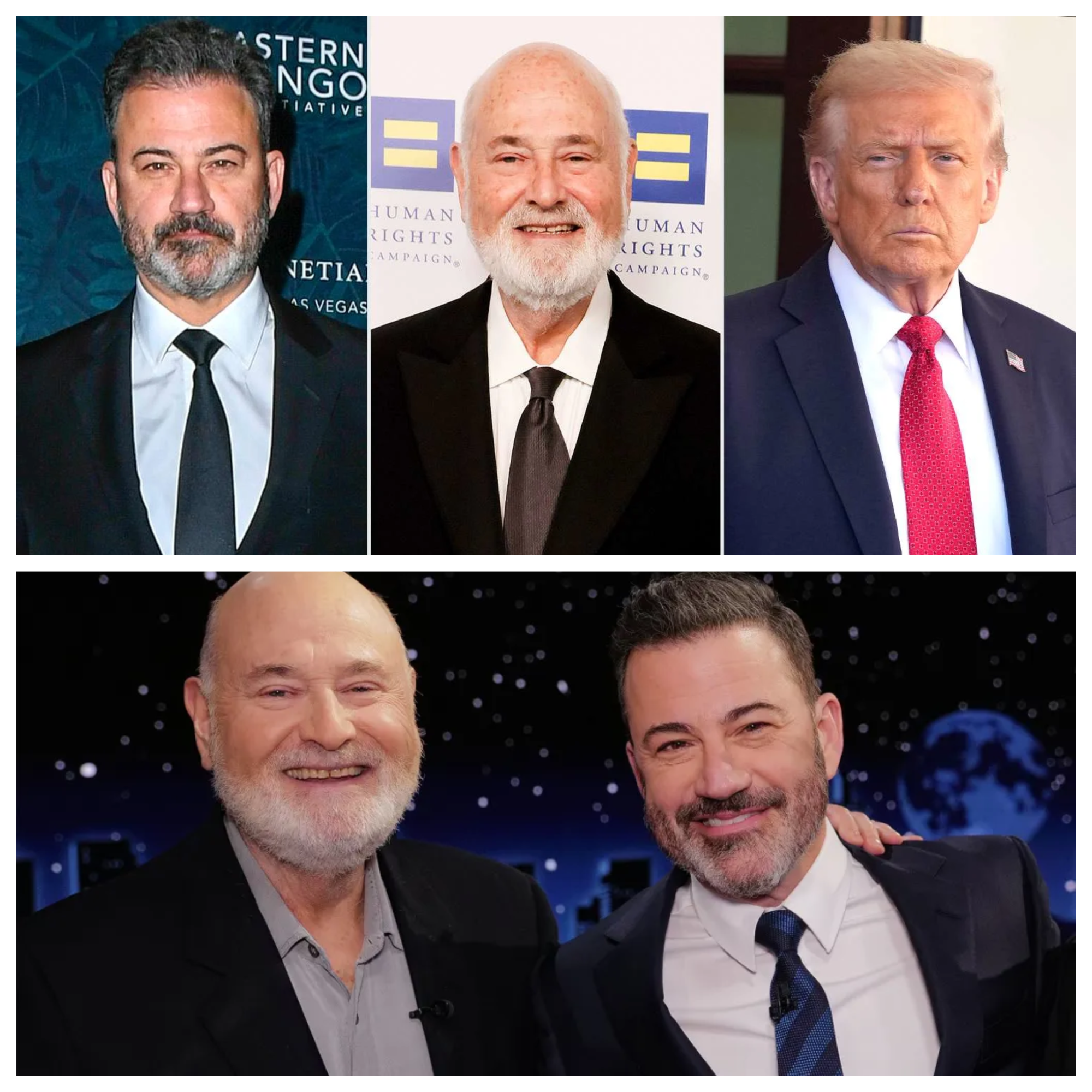
In a fiery monologue that has ignited widespread debate, late-night host Jimmy Kimmel lambasted President Donald Trump for his inflammatory remarks about the recently deceased filmmaker Rob Reiner, labeling them as profoundly malicious and unworthy of a leader. The controversy erupted following the shocking deaths of Reiner and his wife Michele on December 14, 2025, in their Los Angeles home, where they were discovered with multiple stab wounds in what authorities are investigating as a double homicide. Kimmel’s impassioned response highlighted a perceived lack of empathy from the White House during a time of national mourning, urging viewers to reflect on the state of leadership in the country.
Rob Reiner, the iconic director behind classics like “When Harry Met Sally,” “The Princess Bride,” and “A Few Good Men,” was a vocal critic of Trump throughout his career. At 78, Reiner had transitioned from acting—famously as Meathead on “All in the Family”—to directing and activism, often using his platform to advocate for progressive causes, including gun control, environmental protection, and democratic reforms. His outspoken nature made him a frequent target of conservative ire, but his tragic end alongside his wife, photographer Michele Singer Reiner, stunned Hollywood and beyond. The couple, married since 1989 and parents to three children, were known for their collaborative work and philanthropy. Autopsy reports released shortly after confirmed they succumbed minutes after sustaining sharp force injuries, with cremation following on December 19. A memorial service is planned for a later date, as the LAPD continues its probe without immediate suspects.
Trump’s response came swiftly via his Truth Social platform, where he revived old grievances, insinuating Reiner’s political activism somehow contributed to his fate. This post, made less than 24 hours after the bodies were found, drew immediate backlash for its timing and tone, especially amid other global tragedies like a terror attack in Australia. Critics argued it exemplified a pattern of divisiveness, prioritizing personal vendettas over condolence. Kimmel, a longtime Trump detractor, didn’t hold back on his ABC show, emphasizing the need for compassion in crisis. He portrayed Trump as disconnected and erratic, suggesting his words reflected a deeper corrosion in decision-making that affects everyday Americans. Kimmel shared personal anecdotes of his interactions with Reiner, painting him as a principled figure who would have encouraged continued scrutiny of such behavior.
The incident has amplified discussions on political rhetoric in an already polarized era. Trump, re-elected in 2024, has faced ongoing criticism for his social media outbursts, which supporters defend as unfiltered honesty but opponents see as reckless. Kimmel, whose “Jimmy Kimmel Live!” has blended comedy with commentary since 2003, has increasingly used his airtime to address societal issues, from healthcare to celebrity feuds. This episode echoes past clashes, like Kimmel’s advocacy for affordable medical care after his son’s heart surgery, positioning him as a voice for the everyman against elite indifference.
As tributes pour in from figures like Martin Scorsese and Meg Ryan, who lauded Reiner’s cinematic legacy, the feud underscores broader tensions. Reiner’s films often explored truth, justice, and human connection—themes ironically at odds with the current discourse. For many, Kimmel’s call to “wake up” resonates as a plea for accountability, reminding audiences that leadership should unite rather than divide. Whether this sparks reconsideration among voters, as Kimmel suggested, remains to be seen, but it certainly exposes the raw nerves in American politics. In a year marked by upheaval, this moment might just be the catalyst for change—or further entrenchment.