The Marvel Cinematic Universe is building toward its most explosive crossover yet with Avengers: Doomsday, arriving December 18, 2026. Directed by Joe and Anthony Russo, this epic pits a massive assembly of heroes against Robert Downey Jr.’s enigmatic Victor von Doom. But the latest rumors are sending shockwaves through the fandom: Steve Rogers’ heartfelt decision at the end of Avengers: Endgame—traveling back in time to live with Peggy Carter—may have fractured reality itself, triggering devastating incursions that wiped out Doom’s family and erased his entire universe. This personal tragedy could fuel Doom’s rage, transforming him from a calculating genius into a multiversal menace hell-bent on vengeance.
In Endgame, Steve Rogers chose happiness after years of sacrifice, returning the Infinity Stones and staying in the past to build a life with Peggy. It was a poignant, earned ending for the First Avenger—a moment of peace amid endless war. But whispers from insiders and fan theories suggest this act of self-preservation had catastrophic ripple effects. By creating a branched timeline or coexisting with his past self, Steve inadvertently destabilized the multiverse, accelerating “incursions”—cataclysmic collisions between realities that destroy one or both universes involved.
Introduced in Doctor Strange in the Multiverse of Madness, incursions represent the ultimate threat to existence, where Earths smash together in apocalyptic events. If Steve’s timeline meddling ignited a chain reaction, it could explain the escalating chaos plaguing the MCU. His quiet domestic life—perhaps raising a family, as hinted in recent teasers showing him cradling a newborn—becomes the unwitting spark for universal collapse. This twist reframes Steve’s happy ending as a selfish choice with galaxy-shattering consequences, forcing him to confront the fallout when Doom comes knocking.
Robert Downey Jr.’s Doctor Doom emerges as the film’s central antagonist, a brilliant tyrant blending science and sorcery. Unlike a straightforward conqueror, this version carries profound grief. Rumors paint Doom as a survivor whose world was obliterated in an incursion traced directly to Steve’s interference. His family—gone in an instant—fuels a burning vendetta. Doom doesn’t just want power; he seeks justice, or twisted revenge, against the man whose personal joy doomed billions. Manipulating heroes and realities alike, he positions himself as judge and executioner, viewing the Avengers as complicit in the multiverse’s fragility.
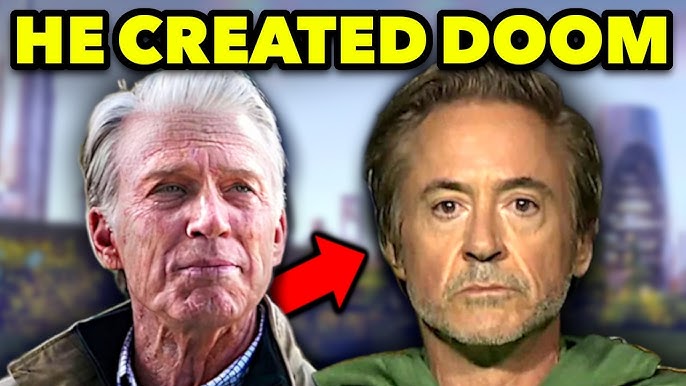
Chris Evans reprises Steve Rogers, pulled from retirement into the fray. Teasers depict him unpacking his classic suit, cradling a child, and facing an uncertain future—perhaps as Doom arrives at his doorstep. This return isn’t mere nostalgia; it’s a direct confrontation with Endgame’s legacy. Steve, the MCU’s moral compass, must grapple with unintended heroism-turned-catastrophe. Does he defend his choice to live fully, or sacrifice again for the greater good? The emotional stakes skyrocket, pitting Captain America’s ideals against Doom’s righteous fury.
The massive ensemble amplifies the drama. Anthony Mackie’s Sam Wilson leads as the new Captain America, alongside Chris Hemsworth’s Thor, Paul Rudd’s Ant-Man, Florence Pugh’s Yelena Belova, and Sebastian Stan’s Bucky Barnes. Wakanda’s warriors, including Letitia Wright’s Shuri, join Pedro Pascal’s Reed Richards and the Fantastic Four. Legacy X-Men like Hugh Jackman’s Wolverine and classic mutants add multiversal depth. Even Tobey Maguire’s Spider-Man and other variants may swing in, highlighting realities lost to incursions.
Doom’s plan reportedly involves exploiting these collisions, perhaps accelerating them to reshape existence in his image—echoing comic arcs where he seizes godlike control amid collapse. His resemblance to Tony Stark adds psychological torment, forcing Steve to battle a distorted mirror of his lost friend. Themes of sacrifice versus selfishness dominate: Steve chose love over duty, while Doom’s loss hardens him into a force demanding accountability.
Visually, expect Russo Brothers spectacle—shattering realities, clashing Earths, and intimate showdowns. Incursions could manifest as apocalyptic skies cracking open, cities merging in chaos, heroes witnessing their worlds vanish. Alan Silvestri’s returning score will underscore the tragedy, blending triumphant motifs with haunting despair.
Fan reactions are divided yet electrified. Many praise the bold retcon, tying loose Endgame threads into a cohesive saga climax. It elevates Doom beyond villainy, making him a tragic foil to Steve’s optimism. Others worry it undermines Steve’s arc, painting his happiness as reckless. Yet the drama promises powerhouse performances: Evans’ quiet resolve clashing with Downey’s icy intellect.
As Doomsday bridges to Avengers: Secret Wars in 2027, this rumor positions it as the Multiverse Saga’s emotional gut-punch. Incursions aren’t abstract threats—they’re personal devastations, born from one man’s dance with destiny. Steve Rogers saved the world countless times; now, he may have doomed it. When heroes assemble against Doom’s wrath, the battle won’t just be for survival—it’s for redemption, legacy, and the cost of choosing oneself in an infinite cosmos.
With production wrapped and teasers rolling, Avengers: Doomsday feels poised to deliver Marvel’s most heartbreaking chapter. Steve’s time travel wasn’t an ending—it was the beginning of the end.